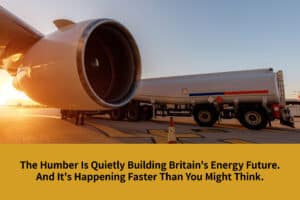
The Humber Freeport, established in 2021, has quickly become a cornerstone of economic and industrial development for Humberside. It particularly benefits the towns on the south bank of the Humber, including Grimsby, Cleethorpes, and Immingham, while also creating a ripple effect of economic benefits that extend to nearby areas, including Scunthorpe and Doncaster.
Freeport has reportedly brought innovative technologies and new investments to the region, attracting more than £1 billion in pledges within its first year of operation and supporting the creation of potentially thousands of jobs. This strategic initiative is pivotal to the region’s long-term prosperity, helping to reshape its economic landscape by creating opportunities in various industries.
What is a Freeport?
A freeport is a special economic zone that allows businesses to import goods, manufacture products, and export them without being subject to standard customs rules, taxes, and tariffs that apply elsewhere in the country. These zones provide a range of tax incentives and simplified regulations to encourage investment and economic activity. In essence, a Freeport is a designated area where businesses can operate with reduced bureaucratic and financial barriers, fostering economic growth and innovation. While freeports are not a new concept, having existed in various forms globally, the UK government revitalised the idea post-Brexit, positioning them as a key part of the country’s trade and economic strategy.
The Humber Freeport’s strategic advantage is hard to ignore. Situated along the Humber Estuary, one of the UK’s busiest trading hubs, the Freeport benefits from its proximity to major European markets and excellent transport links via sea, rail, and road. The towns of Grimsby, Cleethorpes and Immingham, home to some of the busiest ports in the UK, are central to these logistics networks. The region also serves as a critical location for decarbonisation efforts, as the Humber accounts for over 40% of the UK’s industrial emissions. Transforming the area into a green energy leader is essential for local economic resilience and meeting the country’s ambitious net-zero targets.

How Does the Humber Freeport Benefit the Local Economy?
The Humber Freeport significantly boosts the local economy. These economic benefits include:
1. Attracting Investment
The tax incentives offered by the Humber Freeport make it an attractive destination for national and international businesses. From reduced tariffs to tax breaks on capital investments and employment, these benefits lower operational costs, enabling companies to invest more in innovation and expansion. With more than £1 billion in pledges already made, the Freeport has become a magnet for investment in green technologies, logistics, and advanced manufacturing, with Immingham and Scunthorpe particularly benefitting from these developments.
While the region has long been home to traditional heavy industries, such as oil refining and petrochemicals, the Freeport is helping shift this narrative toward sustainability. Global energy giants like Siemens Gamesa and Ørsted are heavily invested in the Humber, making it a leader in offshore wind energy. The Freeport’s infrastructure supports further expansion in renewable energy projects, helping the UK meet its environmental targets and ensuring that towns like Grimsby and Cleethorpes remain at the forefront of industrial change.
2. Job Creation and Skills Development
One of Humber Freeport’s most immediate benefits is job creation. Partnerships with local educational institutions are cultivating the skilled workforce needed to drive these new industries. These apprenticeship programs, skills training, and job placement services are crucial to ensuring that the local population is well-equipped to take on advanced manufacturing, logistics, and renewable energy roles.
This job creation extends beyond the immediate beneficiaries of Freeport’s projects. As new industries flourish, the broader economy has a ripple effect. Local businesses in the retail, hospitality, and real estate sectors benefit from the influx of workers and increased economic activity. This helps strengthen the overall prosperity of towns across the south bank of the Humber, creating a more vibrant and sustainable regional economy.

3. Boosting Trade and Export Opportunities
By simplifying customs procedures, reducing tariffs, and providing a duty-free environment, the Humber Freeport enables businesses to trade more efficiently and cost-effectively. This is particularly crucial in a post-Brexit Britain, where maintaining international trade relationships and competitiveness is key.
The Freeport’s strategic location along major global trade routes enhances its value as a trading hub. Companies can import raw materials, process them within the Freeport, and re-export finished goods without incurring import taxes. This gives businesses in the Freeport, particularly those in Immingham and Grimsby’s bustling ports, a competitive edge when selling their products abroad.
Types of Businesses Using the Humber Freeport
The Humber Freeport attracts a diverse range of businesses across multiple industries and is particularly popular with companies aligned with the UK’s future industrial and environmental goals. These include renewable energy companies, advanced manufacturing and engineering firms, and logistics and distribution companies.
1. Renewable Energy Companies
The Freeport’s focus on green energy is a major draw for companies in this sector. Offshore wind farms in the North Sea are supported by the infrastructure available in the Humber region, and companies like Siemens Gamesa and Ørsted are key players. Siemens Gamesa, for instance, operates a massive offshore wind turbine blade factory in Hull, while Grimsby is home to a significant offshore wind operations and maintenance hub. The Freeport facilitates the expansion of these operations, allowing for greater investment in research and development and the production of advanced technologies.

2. Advanced Manufacturing and Engineering
The Freeport’s proximity to industrial areas and transport networks makes it an ideal location for advanced manufacturing and engineering firms. Businesses benefit from streamlined customs processes, allowing them to efficiently source materials, manufacture products, and distribute them domestically and internationally. This is particularly important in neighbouring towns like Scunthorpe, which has a long history of steel production and is now evolving to include new manufacturing opportunities tied to green technologies.
3. Logistics and Distribution Companies
The Humber Freeport’s location along one of the UK’s busiest estuaries, combined with excellent transport links in Immingham and Grimsby, makes it a prime spot for logistics and distribution companies. Major players in shipping and freight logistics see the Freeport as an opportunity to streamline operations, moving goods between Europe and the UK with reduced customs duties and faster processing times. These companies help the UK remain competitive in global trade by lowering the costs and complexities associated with cross-border transport.
The Humber Freeport: Serviced Accommodation for Business Travellers
For business travellers working at the Humber Freeport, Coppergate Serviced Accommodation provides a welcome break from cramped and uncomfortable hotel living. With modern, comfortable properties in Grimsby, Cleethorpes and Doncaster, Coppergate provides all the amenities needed for a stress-free stay, whether short or long-term. Our property’s spacious living areas, fully equipped kitchens, and high-speed internet ensure that professionals can easily stay connected to work and family while enjoying the comforts of home.
To learn more or to book your next stay in Grimsby, Cleethorpes or Doncaster, contact our booking team today.